

Anthropic’s entry into the stock market is anticipated to be significant — featuring a substantial valuation, considerable expenditures, major warnings, and considerable uncertainty for investors, which could serve as a key indicator of the artificial intelligence sector’s trajectory by 2027.
In a revised regulatory document submitted to U.S. authorities on Tuesday, Anthropic, headquartered in San Francisco, outlined an expected price range for its initial public offering (IPO) of $70 to $78 per share. This suggests a fully diluted market valuation estimated at about $1.3 trillion at the midpoint and rising to $1.4 trillion at the highest end, which would mark the largest tech IPO in history.
Greg Taylor, a portfolio manager at Vancouver’s PenderFund Capital Management, commented, “This is poised to be one of the largest IPOs ever.”
Typically, the scale of an IPO is gauged by the capital raised. Anthropic is aiming to secure as much as $64.4 billion through its public offering. Should this occur, it would follow only SpaceX’s record-breaking market launch in June.
Anthropic is expected to commence trading on the Nasdaq exchange next week, with a listing notice indicating a debut on November 19. However, the company has not yet confirmed a specific date in its filings with the U.S. Securities and Exchange Commission (SEC).
Ernest Wong, who leads research at Baskin Wealth Management in Toronto, expects the stock to be a formidable presence when it begins trading on Nasdaq.
“There are only a few stocks globally that are valued over $1 trillion,” he noted. “This highlights the immense significance of AI.”
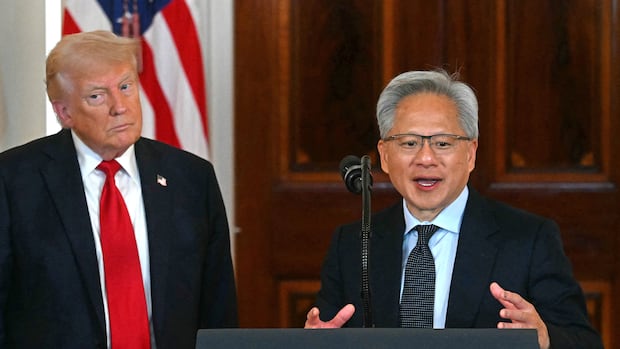
Following Nvidia CEO Jensen Huang’s admission of an affair with a suspected Chinese spy, concerns are being raised regarding the company’s governance and broader implications for the future of AI.
About Anthropic
Founded in 2021, Anthropic originated as a specialized AI research organization when its founders departed from OpenAI, citing concerns over the latter’s profit-driven focus, risk neglect, and excessive investor control.
The company gained traction in 2024 with the introduction of Claude 3.5 Sonnet, which outperformed OpenAI’s GPT-4o on key performance metrics while incurring significantly lower costs than prior AI models.
-
OpenAI cancels upcoming AI model release due to safety issues
-
BMO, CIBC, RBC, TD Bank halt personal AI agents, citing safety and security
-
FRONT BURNER
Will Anthropic’s IPO succeed or fail?
In contrast to traditional for-profit entities like Apple or Microsoft, Anthropic operates as a public benefit corporation, which obligates its board to weigh public safety alongside maximizing shareholder returns.
Currently, Anthropic’s CEO Dario Amodei is a prominent proponent of AI safety, advocating for a slowdown in industry development to allow for the implementation of safety measures.
In its latest regulatory submission to the SEC, Anthropic dedicated 94 pages out of over 300 to outline various risk factors.
The company expressed, “Our AI models may exhibit unintended, misaligned, or autonomous behaviors, which could lead to harmful actions that are not directed by any user or third party.”
Anthropic warned that this might involve, “behavior akin to blackmail or attempts to influence human decision-makers to ensure the model’s continued functioning,” alongside actions that “pose catastrophic or existential threats to humanity.”
Impressive figures
The $1.4 trillion valuation is not the only remarkable figure related to Anthropic’s IPO.
The valuation of the company has varied dramatically in recent months. A $2 trillion valuation was recently discussed. In late May, private investors pegged the company’s value at $965 billion, a significant increase from $380 billion in February.
Taylor remarked, “There’s a noticeable level of optimism factored into these valuations as they emerge.”
“No one can accurately predict what Anthropic will look like five years from now,” he added.

Dario Amodei, CEO and co-founder of Anthropic, participates in the annual World Economic Forum meeting in Davos, Switzerland, in January 2025. (Markus Schreiber/The Associated Press)
The company has experienced significant sales growth. According to regulatory documents, Anthropic generated more than three and a half times the revenue in the first half of 2026 compared to the entire previous year. Approximately 20 percent of this revenue stemmed from two major unnamed clients.
Concurrently, the AI powerhouse is dealing with substantial losses. The company reported a net loss of $80.7 billion through June this year, primarily attributed to non-cash accounting charges. In 2025, the loss was $42 billion.
Anthropic also has ambitious spending goals. The company does not own or build physical data centers, opting instead to lease high-performance computing resources from cloud service providers like Amazon Web Services and Google Cloud through extensive multi-year contracts.
Regulatory filings reveal that Anthropic has secured nearly $900 billion in cloud and computing agreements that will continue into the 2030s and 2040s, collaborating with partners such as Broadcom, SpaceX AI, Google Cloud, Amazon Web Services, and Microsoft Azure.
A significant IPO
Anthropic’s IPO is noteworthy not just for its enormous size.
“Investing in the Anthropic IPO represents one of the first pure-play AI opportunities available,” Taylor stated.
Until now, investors wanting to capitalize on the AI surge had primarily been limited to investing in less AI-centric tech stocks like Microsoft and Nvidia, the latter of which produces chips. While Google is often associated with the AI investment theme, it also boasts significant businesses unrelated to AI, such as Android smartphones and YouTube.
“Their sole focus is on creating new AI models,” Wong said regarding Anthropic. “This fills a crucial gap, as public company data has largely excluded the model-focused companies, which primarily include Anthropic and OpenAI.”
If Anthropic’s IPO becomes a new standard for AI investment, its initial trading days will occur amidst notable volatility in the tech sector.
Earlier this month, both tech and AI stocks faced sharp declines followed by quick recoveries as markets entered a correction phase. Concerns about whether AI companies could balance their significant spending with adequate profits contributed to this volatility. Political worries in the U.S. following the midterm elections about tighter regulations on AI and data centers further complicated the landscape.
Additionally, the recent controversy surrounding Nvidia CEO Jensen Huang’s alleged involvement with a suspected Chinese spy has added complexity to concerns regarding AI investments. The chipmaker’s stock, considered a key indicator for the AI sector, has lost billions in market value in recent days on the Nasdaq, where Anthropic is poised to make its debut.
Echoes of the dot-com bubble?
“The primary risk for Anthropic is that they must contend with other model providers in a highly competitive environment,” Wong stated. “OpenAI develops its own models. SpaceX, through Grok, is a prominent model lab. Not to mention, Google and Meta are also active competitors in this field.”
He predicts that the stock will not be suitable for risk-averse investors initially, as they will evaluate each new Anthropic product against competitors while scrutinizing its substantial investment in data services.
“Expect considerable volatility,” Wong added.
This mirrors the experience of SpaceX since its Nasdaq debut in June, where the stock surged nearly 19 percent on its first day before subsequently dropping as much as 22 percent below its $135 IPO price.
For Taylor, the extensive spending in the AI sector, rapid stock price increases, and close business ties among a few tech companies serve as reminders of a past investment craze that dramatically differentiated winners from losers.
“The dot-com bubble is certainly the most vivid example in many people’s memories,” he remarked. “Everyone was eager to invest in the internet back in 2000.”
While some companies, like Pets.com, failed, others like Google and Microsoft emerged as major players.
“There are significant parallels here with AI,” Taylor concluded. “The challenge lies in determining which companies will ultimately prevail.”