

On Sunday, voters in Sweden participated in a tightly contested election that could either usher a far-right party into governmental power for the first time or steer the nation back toward its historically liberal values.
Recent opinion polls indicated that the centre-left opposition was slightly ahead of the ruling right-wing coalition prior to the parliamentary election held on Sunday.
However, Prime Minister Ulf Kristersson, who has consistently lagged in polls during his four-year tenure, has gained momentum in the final weeks of the campaign, while rival Magdalena Andersson and the Social Democrats have seen a decline in support.
Kristersson has committed to including the far-right Sweden Democrats in the government if his coalition emerges victorious.
Advocates for the right-wing coalition argue that their policies have effectively reduced gang violence and significantly curtailed immigration, claiming that a win would validate these strategies and promote similar policies in the future.
“We can bring together parties, voters, and issues for unified action. That’s how we achieve results,” Kristersson stated to reporters in parliament this week.
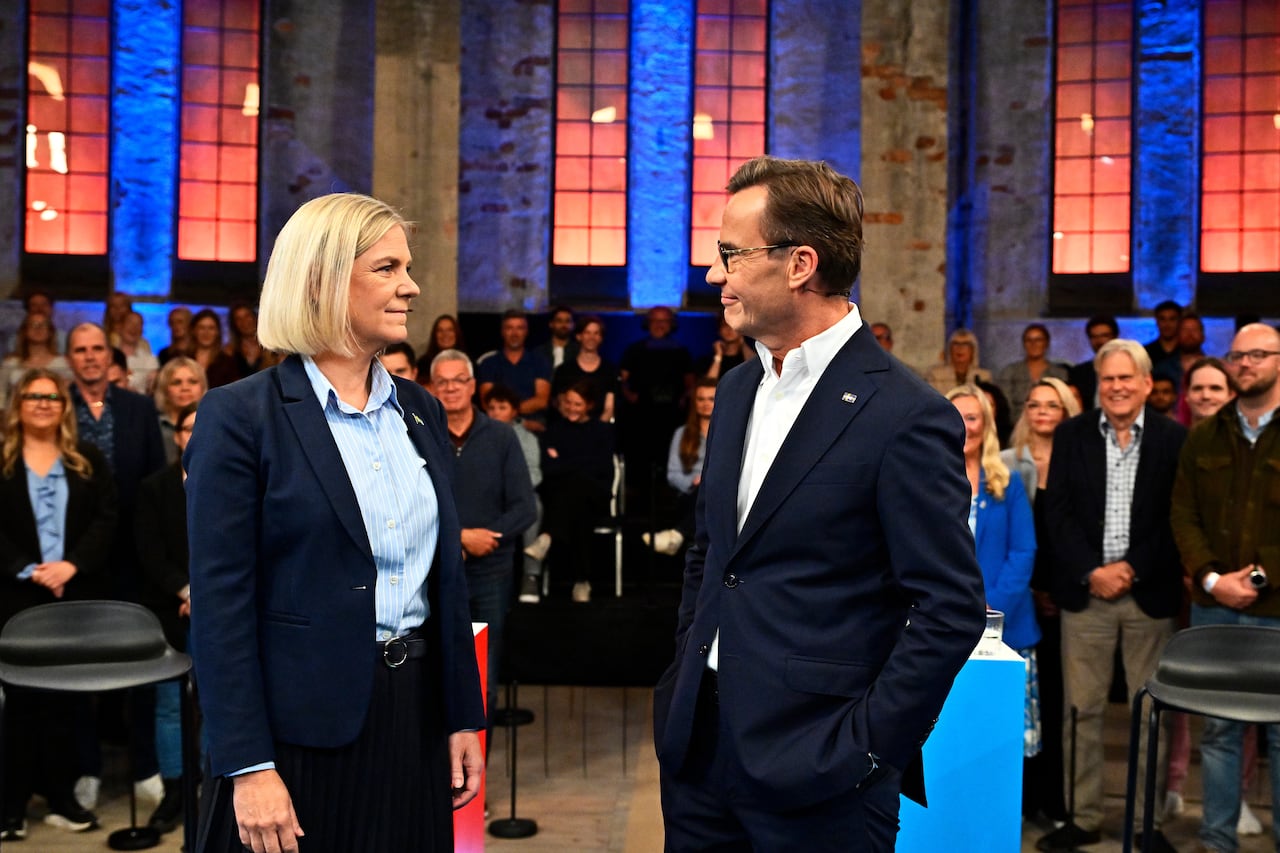
Magdalena Andersson of the centre-left Social Democrats, left, and Ulf Kristersson of Sweden’s ruling right-wing bloc are seen before a televised debate in Gavle on Wednesday. (Anders Wiklund /TT News Agency/The Associated Press)
Opponents argue that this agenda threatens civil liberties and compels immigrants to assimilate more closely to Swedish cultural standards or face expulsion, influenced by both incentives and penalties.
“Our society has become harsher, quieter, and poorer, with growth lagging far behind what it could be, leaving households struggling as their salaries buy less,” Andersson told Reuters.
“Our nation’s strength has always stemmed from sharing in each other’s successes and standing united in tough times.”
Polling stations opened at 8 a.m. local time in the EU member nation of 10 million, which joined NATO following Russia’s full-scale invasion of Ukraine, with exit polls expected soon and preliminary data anticipated around 2 p.m. ET.
Johanna Tornqvist, a 44-year-old market analyst, reported that she voted for the right-wing coalition, asserting that concerns about the Sweden Democrats entering the government were overstated.
“The top priority is to keep the red-greens out of power,” she remarked.
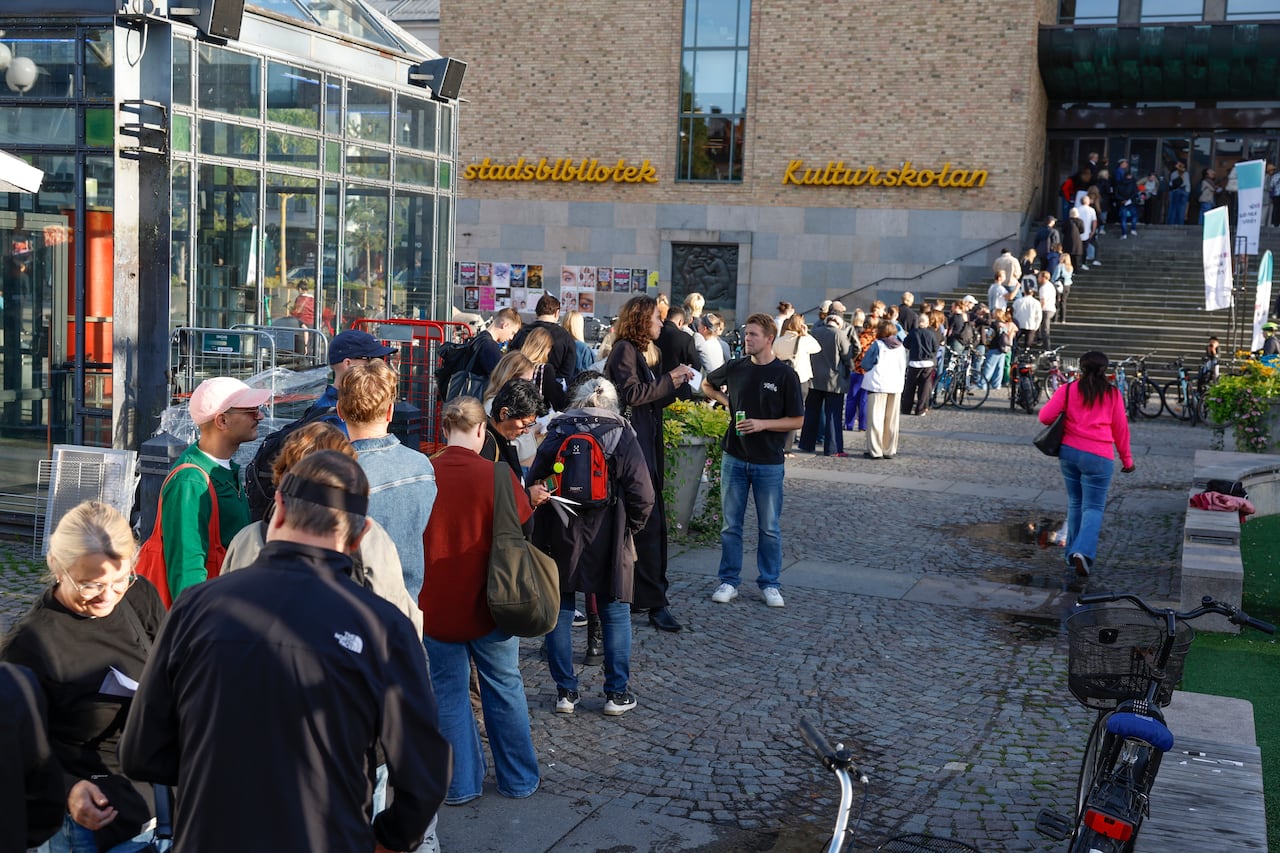
People line up outside a polling station in Stockholm on Friday. (Nicklas Thegerström/TT News Agency/The Associated Press)
Conversely, Susanne Cherment, a 20-year-old student casting her vote for the first time at a polling location in Nacka, east of Stockholm, expressed her dismay over the rhetoric from the Sweden Democrats.
“It’s concerning how many young individuals are attracted to far-right ideologies,” she stated.
A successful electoral outcome for the Sweden Democrats would likely be celebrated by the rising far-right factions across Europe, which gained notable momentum earlier this month from the anti-immigrant Alternative for Germany‘s victory in a state election.
Another country
In Rinkeby, a district in northern Stockholm identified by police as severely socially deprived, voters expressed concerns that conditions could deteriorate further.
“They target Muslims, singling them and other immigrants out. But immigrants are vital contributors to society,” remarked Kahin Ahmed, a 57-year-old sociologist who fled to Sweden from Somalia as a refugee.
“A quarter of healthcare workers are immigrants. If they all stayed home for just one day, Sweden would be paralyzed,” he added.
Over the past four years, the ruling minority coalition, supported by the Sweden Democrats, has eliminated permanent residency for refugees, tightened welfare regulations, and increased deportations of those lacking legal status.
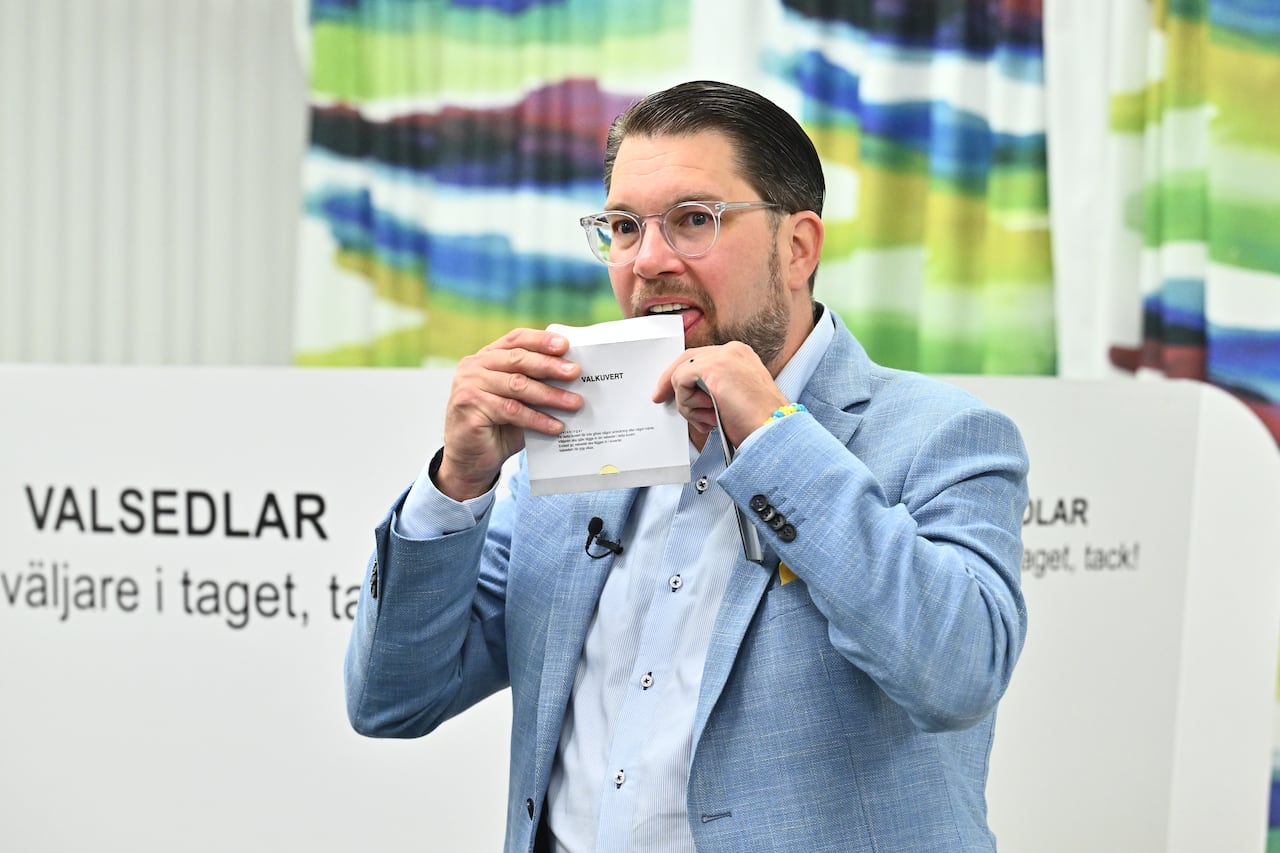
Leader of the Sweden Democrats party Jimmie Åkesson votes in Rinkeby, a suburb of Stockholm, on Saturday, a day prior to the general election in Sweden. (Claudio Bresciani/TT News Agency/The Associated Press)
While voting in Rinkeby on Saturday, Sweden Democrat leader Jimmie Åkesson remarked that the suburb, which has one of the largest Swedish-Somali populations, “does not resemble Sweden.”
The Sweden Democrats have promised to prohibit both the niqab and the burqa if they attain power. Åkesson stated to Reuters that such garments “represent values that I believe do not belong in Sweden.”
Building a government
The right-wing parties have already reached an agreement to establish a four-party government led by Kristersson in the event of a victory, while Andersson’s route to leadership remains uncertain.
Despite celebrity endorsements, including a modified performance by ABBA’s Benny Andersson at a rally, where he changed the lyrics of Mamma Mia to “Magdalena,” the Social Democrats have been losing traction in the polls.
The election outcome may ultimately hinge on whether the Liberals can exceed the four percent threshold to secure parliamentary seats, thereby reinforcing a right-wing coalition comprising Moderates, Christian Democrats, and the Sweden Democrats, who were invited to join earlier this year.
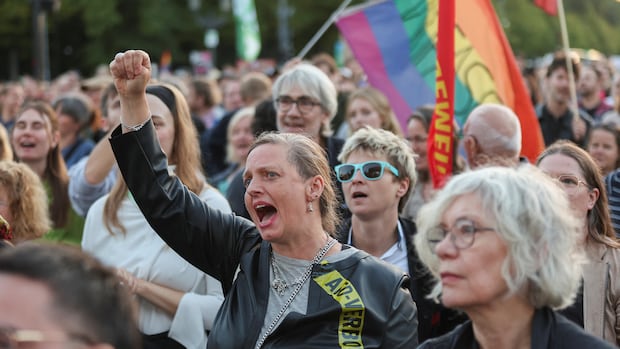
A day after the far-right Alternative for Germany’s (AfD) victory in the state of Saxony-Anhalt, thousands protested in Berlin over the party’s stance on LGBTQ rights and immigration. Meanwhile, AfD leaders celebrated the win, saying ‘Germany is back.’
The Sweden Democrats have spent the last four years supporting Kristersson’s minority government in parliament, thereby gaining credibility within the larger right-wing coalition.
At the same time, both political blocs have aligned on several key voter issues, including backing Ukraine, military rearmament, and support for households affected by the rising cost of living.
While the opposition parties, including the Social Democrats, Greens, Left Party, and Centre Party, largely concur on the necessity for increased welfare and public expenditure, differences remain on various topics, particularly immigration, where Andersson’s party advocates for a stricter stance compared to some of its potential allies.
Disagreements also exist over issues such as taxing billionaires and constructing new nuclear power plants, while the Centre Party is unwilling to support a government that includes the Left Party, complicating Andersson’s efforts to form a cabinet.