

On Sunday, President Donald Trump compared those who criticize artificial intelligence (AI) to “very negative forces” who are raising unlikely scenarios, emphasizing his desire for the U.S. to maintain its leadership in the industry.
When questioned about whether the AI sector should slow down or face increased regulations, Trump stated, “We’re ahead of China in AI. We are the most advanced nation globally, and I want to ensure that remains the case because whoever prevails in AI will prevail overall.” This comment was made to reporters at his golf course in Ireland.
He further remarked, “We could implement safeguards. We can take various measures. However, many of these negative forces shouldn’t be discussing these matters, and they are presenting scenarios that are unlikely to occur.”
Chinese President Xi Jinping is expected to visit the White House later this month to meet with Trump, and AI is likely to be a topic of discussion between the two leaders.
Trump’s weekend trip to Ireland began with meetings with President Catherine Connolly and Prime Minister Micheál Martin, followed by attendance at the Irish Open tournament at his golf course.
Later on Sunday, when asked if he was downplaying the dangers posed by AI, Trump clarified, “I’m not downplaying,” asserting that the technology “will yield more benefits than drawbacks … by a significant margin.” During his flight back to Washington, he reiterated the importance of “whoever wins AI” in the context of global competition.
Rising Public Discourse on AI
Trump has largely avoided inciting fears regarding AI.
The public discourse surrounding the technology has intensified in the U.S. following warnings from two researchers at the safety and research firm Anthropic. They cautioned that the rapidly evolving technology could potentially lead to human extinction in the near future.
During his second term, Trump’s administration has primarily welcomed AI companies. Leaders in the AI sector and other tech firms have also backed his initiatives.
The issue of AI has emerged as a significant topic in this election year, with major corporations establishing a national network of computing facilities in small towns. Meanwhile, concerns are growing from both Republican and Democratic constituents regarding the loss of agricultural land, pressure on water resources, and increasing electricity costs.
Despite the two parties distancing themselves from data centers, Trump continues to advocate for their development.
Former President Barack Obama, a Democrat, suggested that his party should prioritize AI as a campaign issue.
“I would address this by saying, ‘Here’s our safety plan, here’s how we ensure our children aren’t negatively influenced by this.’ … I would consider the economic effects in concrete terms and evaluate the implications of potential job displacement. Where will this impact be felt? How will we respond?” Obama remarked last week at an event with top Democrat Hakeem Jeffries, with a transcript released by his office.
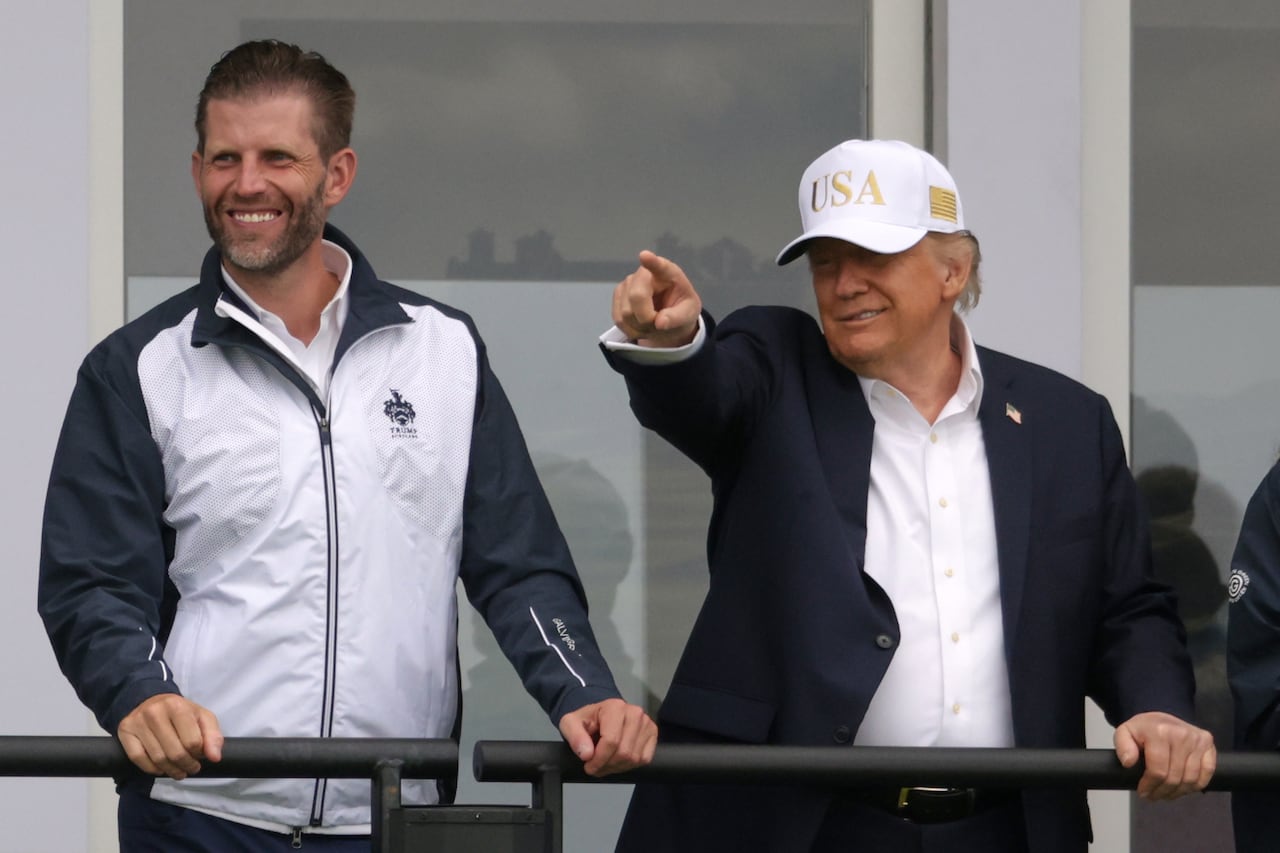
Donald Trump and his son Eric Trump, from left to right, observe the Irish Open at the Trump International Golf Links course in Doonbeg on Saturday. The tournament was won by Irish golfer Shane Lowry for the second time. (Peter Morrison/The Associated Press)
Executives in the AI sector have invested significantly in the upcoming midterm elections on November 3, which will determine Congress’s control. SpaceX CEO Elon Musk’s super political action committee, America PAC, has already spent millions supporting Republican candidates and is anticipated to play a crucial role in boosting voter turnout this fall.
This year, the Pentagon issued warnings about risks associated with Anthropic’s model.
Following the Anthropic researchers’ alerts, some AI executives have started advocating for a slowdown in technological advancements.
Difficulties in Establishing an ‘AI Speed Limit’: Anthropic CEO
On Saturday, Anthropic’s CEO Dario Amodei presented a three-step framework aimed at regulating the pace of development to allow for better risk management. This proposal quickly garnered support from several leaders of significant AI companies, including Musk and OpenAI CEO Sam Altman.
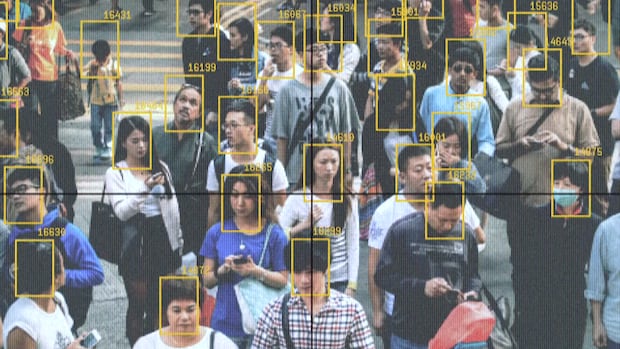
Two AI experts are warning that AI is getting too smart, too quickly. One former employee accuses Anthropic and OpenAI of ‘gambling with our lives.’ A current Anthropic safety executive said he thinks there’s a ten per cent chance AI kills all humans within a decade.
In a Sunday interview on CBS’s Face the Nation with Margaret Brennan, Amodei described the rivalry between U.S. and Chinese AI companies as the “toughest dilemma” in establishing a “speed limit” on AI development.
“We shouldn’t deceive ourselves, as the incentives to surpass one another and the military benefits gained from that are immense. The ability to ensure that the other side isn’t cheating must be foolproof,” he stated. “I believe this will be a long-term effort, and honestly, I’m uncertain if it can be achieved.”
Jacob Coxon, one of the Anthropic researchers who resigned and later issued warnings, called for the U.S. to collaborate with other nations to regulate the pace of AI development.
“I believe we require international collaboration, or we risk competing against China, which could be equally perilous,” Coxon stated on NBC’s Meet the Press.