

According to the RCMP, one-third of all investigations concerning online child sexual exploitation in Prince Edward Island now involve materials created by artificial intelligence.
In a statement, Scott Ferris, a senior communications advisor with P.E.I. RCMP, noted a “significant rise” in AI-generated child sexual exploitation content in regions under their jurisdiction on the Island.
Ferris estimated that around 33 percent of the RCMP’s online child abuse investigations now include AI-generated materials, excluding the municipalities of Charlottetown, Summerside, and Kensington, which have their own police departments.
“[AI] is increasingly being used to create images or alter images of minors,” stated Const. Tim Keizer of the P.E.I. RCMP. “It is becoming more challenging to differentiate since AI-generated images are highly realistic.”

Const. Tim Keizer, Queens District RCMP, states that individuals are prosecuted equally for creating, possessing, or distributing child sexual abuse material, regardless of whether the images are AI-generated. (RCMP)
Under Canadian law, AI-generated child sexual abuse material is treated identically to real images. Section 163.1 of the Criminal Code prohibits any visual representation of a minor for sexual purposes.
“There is no distinction,” Keizer explained to CBC News. “The charges are identical as if it were not produced through AI.”
In a July message, Cpl. Gavin Moore, the media relations officer for P.E.I. RCMP, mentioned that approximately two RCMP cases each month concerning child sexual abuse imagery lead to charges. He indicated that this figure likely reflects less than half of the cases reported due to issues such as lack of sufficient evidence.
-
Police say 19 victims identified in AI child sexual abuse image investigation
-
‘Dad, I screwed up’: A year after their son’s death, P.E.I. family speaks out about sextortion
The RCMP estimates that AI technologies are involved in about a third of the cases to either create images and videos of fictitious children for sexual reasons or to produce “deepfakes” — digitally manipulated representations of real individuals.
Deepfakes are frequently utilized in sextortion scenarios, where offenders threaten to release sexual images to extort money or additional explicit content from victims.
Moore informed CBC News that the P.E.I. RCMP recorded 26 reported cases of sextortion last year. Up to this point in the current year, Summerside authorities have identified one sextortion incident involving AI-generated child abuse material, along with another suspected case of AI-generated child sexual exploitation imagery.

If it seems like Prince Edward Island has been dealing with a flurry of child sexual exploitations lately, there are reasons for that. Apps like Snapchat and Kik Messenger are flagging suspicious activity to the authorities, and police forces are launching investigations based on those tips. CBC’s Laura Meader reports.
This year, Charlottetown police have identified one case of AI-generated child abuse material.
Keizer emphasized the need for education among youth and parents regarding the potential risks of sharing images online.
“We must recognize that these images can be obtained from the internet and manipulated in various ways,” he remarked. “We have a social responsibility concerning our technologies.”
Even if AI-generated content does not portray actual children, the potential damage remains significant, according to Jacques Marcoux, director of research and analytics at the Canadian Centre for Child Protection.
“Many of these AI-generated images are based on the likeness of real children in our communities,” he shared with CBC News.
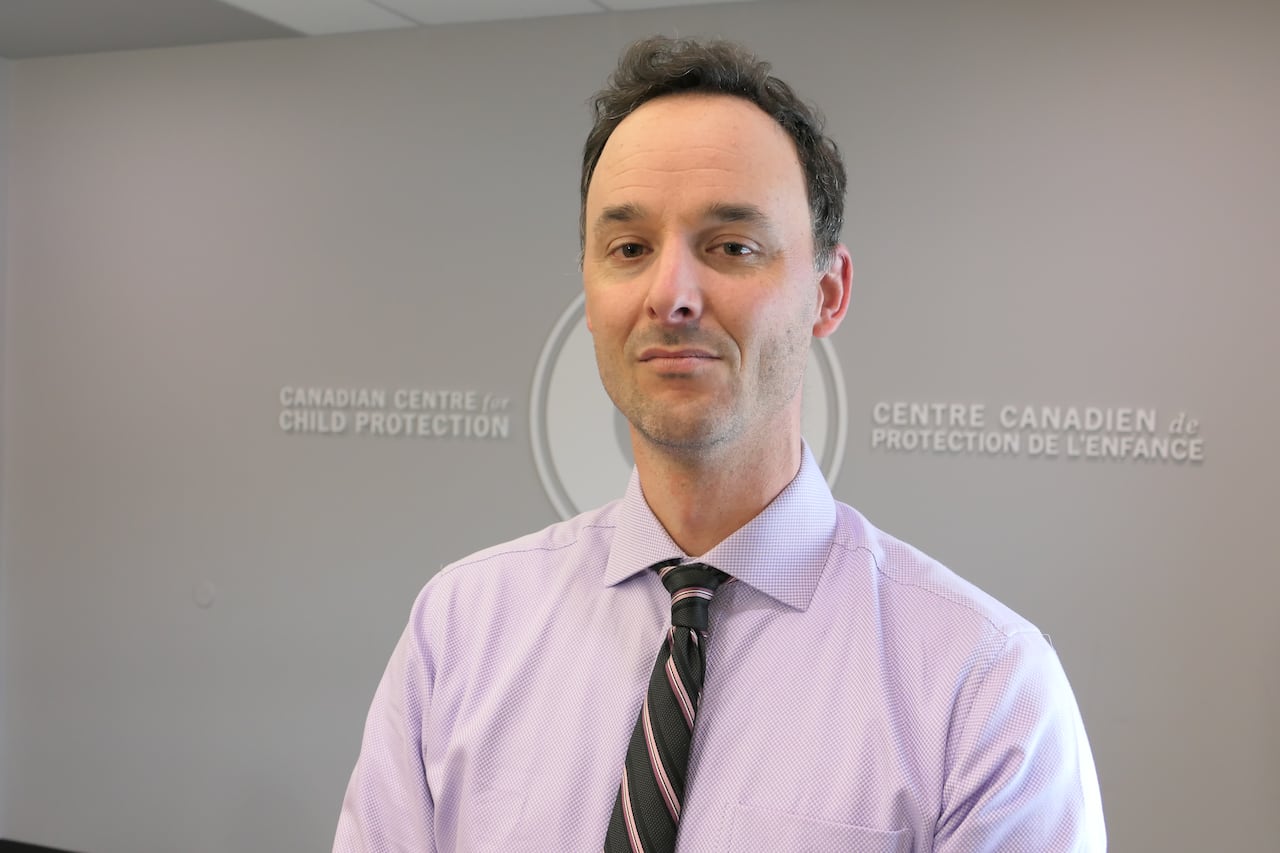
Jacques Marcoux, director of research and analytics at the Canadian Centre for Child Protection, asserts that AI-generated child abuse content is still harmful. (Jeff Stapleton/CBC)
“[Some AI models are] extensive scraping operations that indiscriminately collect images from across the internet, and a significant amount of child sexual abuse material exists online that is often concealed in plain sight on mainstream platforms used by many Canadians.”
While the increasing realism of AI content does not alter legal definitions under the Criminal Code, Marcoux emphasized the necessity of closely monitoring AI-generated exploitation.
“It’s crucial to keep track of it as much as possible to understand the extent of this growing problem,” Marcoux stated.
“There’s no doubt that AI is increasing interest and demand.”