

Recent findings from the Université de Sherbrooke indicate that fatalities among individuals without housing surged by approximately 180 per cent from 2020 to 2024 in Quebec.
In 2020, there were 45 deaths among the unhoused, which increased to 127 by 2024.
Throughout this timeframe, the total number of deaths among unhoused individuals in the province reached 400. Montreal recorded the highest per capita death rate, followed by the Outaouais region.
“This is a deeply saddening and regrettable situation,” stated Dr. David-Martin Milot, a public health physician and one of the project supervisors.
“Health and public health authorities have expressed the need to gain a better understanding of this phenomenon so that we can tailor our interventions more effectively.”
Highlighting the issue
Milot mentioned that one of the study’s aims was to leverage data to underscore the gravity of the situation and instill a sense of urgency.
The initial phase of the research relied on death records from Quebec coroners, which only investigate deaths under unclear circumstances, suggesting that the actual number of fatalities among the unhoused is even higher, according to Milot.
For instance, if an individual passes away due to a pre-existing medical condition, it may not be reported to the coroner for investigation.
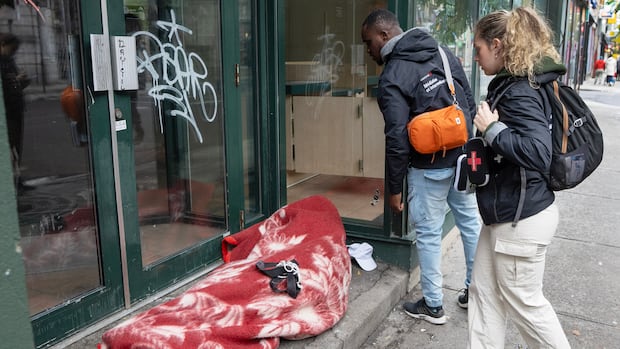
New findings from researchers at the Université de Sherbrooke illustrate a dire situation regarding homelessness in the province. The mortality rate among women is rising sharply, and they are dying at younger ages. Advocates emphasize that women are particularly at risk on the streets and call for immediate action to enhance support for them.
To improve the documentation of these deaths, the research team introduced an online form this month that allows anyone to report the death of an individual experiencing homelessness. It can be accessed here.
Before this project, there was no comprehensive data on the annual number of deaths among unhoused individuals in Quebec.
Higher mortality rates for women
The researchers discovered that fatalities among unhoused men rose by 175 per cent, while the increase for women was even steeper at 211 per cent.
The average life expectancy for unhoused men was around 47 years, in contrast to 80 years for those with stable housing. For women, the gap was more significant, with unhoused women averaging 42 years of life compared to 84 years for those with a permanent residence.
“This is alarmingly low. It represents roughly half of the life expectancy of the general population,” Milot remarked. “We must question what is happening in this context.”
Na’kuset, the executive director of the Native Women’s Shelter of Montreal, argues that additional data is not what is required.
“We already have these numbers because we are the ones recording the names, nations, and communities of our deceased members,” she stated.
Na’kuset calls for all levels of government to increase funding aimed at housing women, particularly Indigenous women, who comprise a significant portion of those who lose their lives.
“This situation is not acceptable and is heartbreaking,” Na’kuset expressed.
“We will continue to honor those who have passed. However, we require more than just awareness; we need actionable steps.”
Assaults on unhoused women
Diane Pilote, the executive director of Chez Doris, a women’s shelter in Montreal, stated that she was not surprised by the results.
“Each month, we observe approximately 30 to 40 new faces,” she noted. “There is a genuine increase in the number of women facing homelessness.”
According to Pilote, very few shelters are equipped to accommodate women, and when there is no available space, women face heightened dangers on the streets.
“Women encounter more violence simply due to their gender,” she remarked.
Alex Desjardins, a community development coordinator at Chez Doris with 15 years of experience working with unhoused individuals, concurs.
“Often, they are seeking safety and protection from men on the streets,” he explained.
“In many cases — though not always — it can be a situation where a man offers, ‘You can come live with me. You can stay at my camp.’ Then, after a few days or weeks, it turns into, ‘You can stay, but you’ll need to engage in sexual activities with me,’” Desjardins elaborated.
He stated that refusal can lead to physical and sexual violence.
Desjardins added that such traumatic experiences may make some women hesitant to seek medical assistance.
“They might think, ‘I don’t trust those who claim they will help me. I have been abused throughout my life. I’ve been harmed by this person,’ and thus they do not feel secure enough to seek that support,” he said.
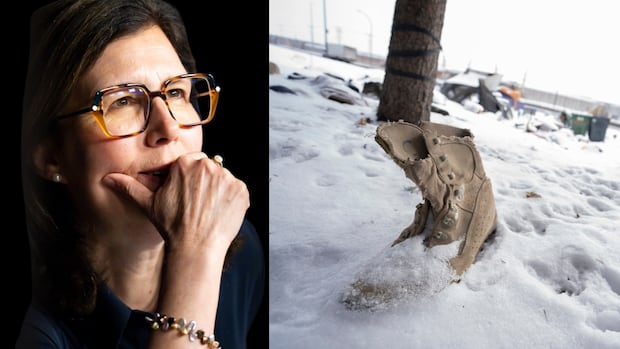
Quebec coroner Stéphanie Gamache will lead a public inquiry into the deaths of five unhoused people, which took place over the past seven months in Montreal. The city’s mayor, who was visibly upset while announcing the deaths of two individuals experiencing homelessness, indicated that the final report will include recommendations for authorities to help prevent such incidents.
In response to this need, Chez Doris has enlisted volunteer medical professionals to operate a clinic at the shelter several days a week.
“They prefer not to go elsewhere. They want to remain here,” Desjardins shared. “It’s one of the few locations where they still feel secure.”
The office of the minister responsible for social services revealed that Quebec intends to formulate a province-wide strategy to combat homelessness and has already allocated $28 million to expedite actions in three regions severely impacted, including Greater Montreal, Quebec City, and the Outaouais region.