

Toronto is currently hosting the inaugural Canada Investment Summit, attracting numerous affluent investors.
The event kicked off with a reception on Sunday and aims to connect international investors with Canadian business executives, with the objective of generating $1 trillion in investments across the nation within the next five years.
Prime Minister Mark Carney, a former central banker and CEO of Brookfield Asset Management, is well-acquainted with high-profile investors. However, the intensifying trade conflict between Canada and the U.S. has increased the urgency to establish new partnerships and demonstrate that Canada is an attractive investment destination.
So, who is attending the summit and what steps must Canada take to secure funding for its major initiatives? Here’s what you need to know.
Who is attending?
According to previous reports from CBC News, Carney has invited 100 of the world’s leading investors to the summit. While the government has not disclosed the complete list of guests, some notable figures are believed to be included.
Prominent attendees include Larry Fink, the chairman of BlackRock Inc., which is the largest asset manager in the world, and Dilhan Pillay, the CEO of Singapore’s Temasek investment firm. Additionally, representatives from substantial sovereign wealth funds, such as Norway’s government pension fund and state-owned enterprises like the Abu Dhabi National Oil Co., will also be present.
“It’s essentially a who’s who of the investment community,” remarked Jeremy Kronick, president and CEO of the C.D. Howe Institute, a respected economic think tank, noting that numerous banks and investment managers from both Canada and abroad are expected to join.
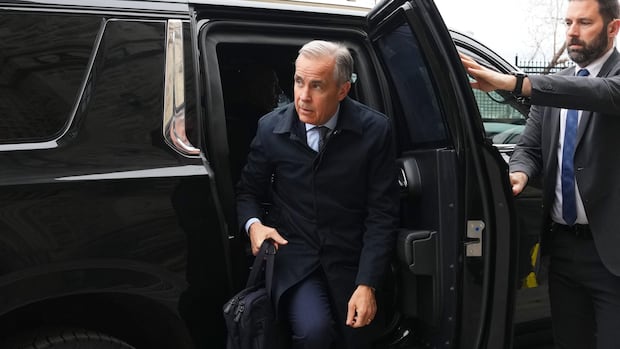
Prime Minister Mark Carney is inviting 100 of the world’s leading investors to a summit in Toronto in September, where he will promote Canada as a favorable investment location.
A list of attendees for the reception on Sunday evening also included senior executives from various Canadian firms alongside American leaders, such as those from Air Canada, the AI company Cohere, Enbridge, and Alto, which is working on a proposed high-speed rail line connecting Toronto and Quebec City.
Numerous Canadian politicians, including several premiers, were also present at the event.
What projects are being discussed?
According to a 66-page prospectus obtained by CBC News, there are 167 projects under consideration, ranging from a proposed pipeline transporting oil from Alberta to the coast of British Columbia to the development of satellite technology for Earth observation.
These projects are categorized into eight distinct groups: 11 conventional energy initiatives, 31 clean energy projects, 63 in mining and metals, 16 related to marine and port infrastructure, 11 in power and utilities, 10 focused on digital technology, 19 in advanced manufacturing, and six transportation initiatives.
More than half of these projects pertain to energy and mining, indicating the government’s priorities, according to Kronick.
Some of the most significant and costly projects highlighted include a $35 billion pipeline to British Columbia, a $79 billion expansion of the Port of Churchill in northern Manitoba, and the proposed $28.5 billion Ksi Lisims liquid natural gas terminal on the B.C. coast.
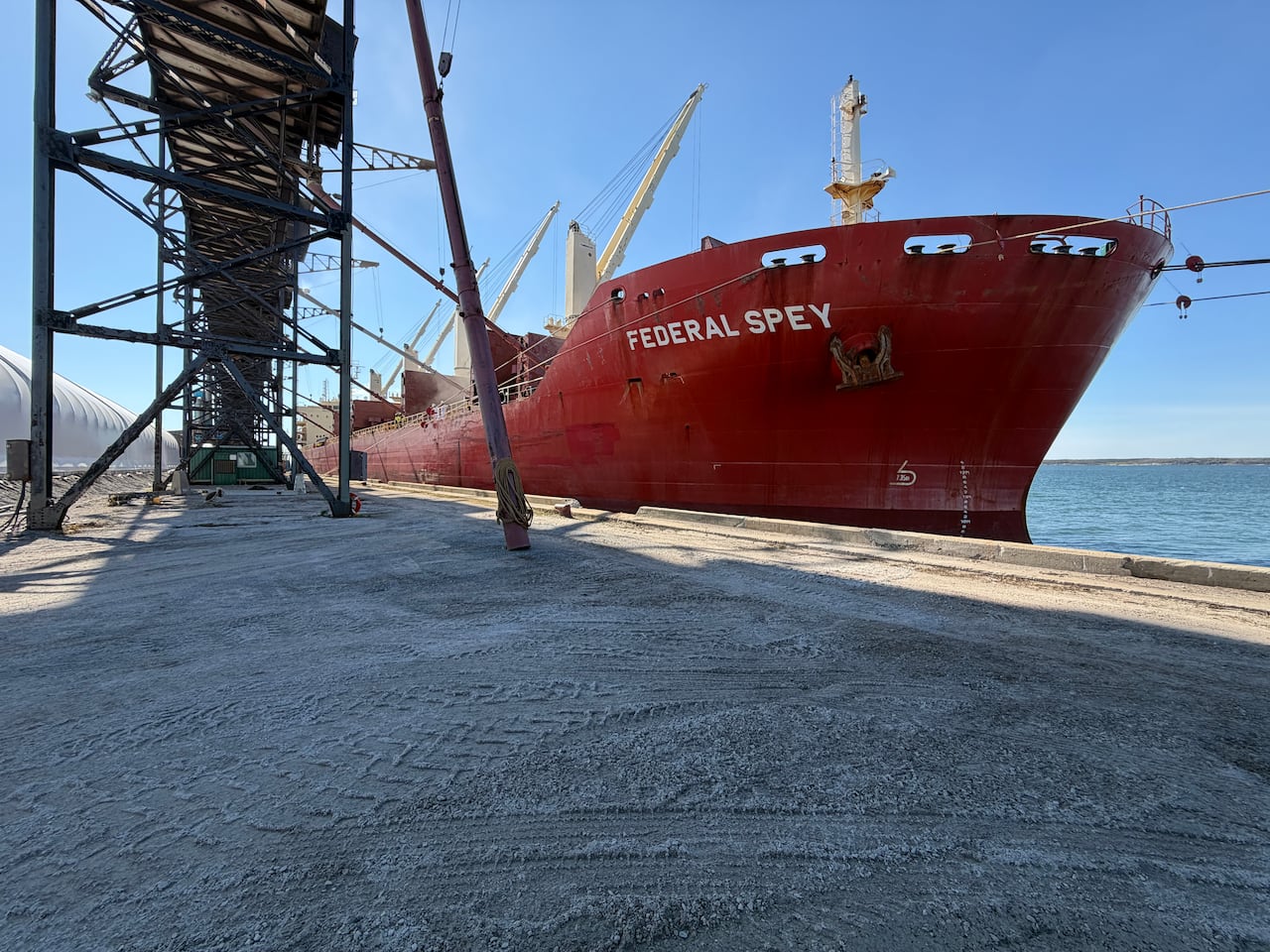
A grain vessel is docked at the Port of Churchill on Aug. 31. The expansion of this northern Manitoba port is among the 167 projects being discussed at this week’s summit. (Josh Crabb/CBC)
Why is this necessary?
The aim is to present Canada as a “compelling investment destination,” as described by the government — even though this perception has not always been accurate.
Kronick points out that prolonged turnaround times for significant projects and uncertainty surrounding their approval have previously deterred some global investors from Canadian ventures.
A recent study by the CPP Investment Insights Institute, which is assisting in leading the summit, gathered insights from 65 international institutional investors regarding their views on various developed nations.
Canada ranked highest for stability and regulatory predictability, with investors noting potential in Canada’s critical minerals, energy, and other resources. However, concerns about regulatory complexities and permitting durations were significant, particularly among those focused on mining and energy projects, as highlighted in the report.
Given that Canada is viewed as a smaller economy, Kronick believes that more efforts are necessary to position it competitively against other developed countries. He argues that hosting this summit is a positive step in demonstrating the country’s commitment to large-scale projects.
“I think the shift in tone is encouraging,” said Kronick. “It has been lacking in recent years.”
He emphasizes that local business leaders must demonstrate Canada’s seriousness regarding the major initiatives at hand, ensuring the workforce and resources are available for swift execution.
Even if immediate deals do not emerge, Kronick believes that future agreements could significantly enhance Canada’s productivity and GDP.
If the government navigates this correctly, a report from TD Bank forecasts that Canada may experience an investment “supercycle” lasting a decade or more, leading to job creation and an increase in real output per capita by $12,000.
Why seek foreign investment?
However, the concept of foreign investment raises concerns for some, particularly regarding the potential for foreign entities to exert excessive influence over Canadian projects.
NDP Leader Avi Lewis has openly criticized Carney’s investment summit, suggesting it is a strategy to “rescue this country by selling it off.”
A counter-summit protest is planned to coincide with the event, where organizers contend that the government will essentially “auction off” public resources in any agreements with external companies.

NDP Leader Avi Lewis informs Power & Politics that he is urging the federal government to implement export taxes on Canadian energy and critical minerals as the trade conflict with the U.S. escalates.
Moreover, not all foreign investments are viewed the same, according to Walid Hejazi, an economics professor at the Rotman School of Management in Toronto, who specializes in foreign investment.
He notes that there are always perceived risks associated with outside investments; concerns that these companies may want to dominate the production and strategic choices regarding those investments. Public sentiment tends to worsen when the investments relate to sectors considered strategic, such as critical infrastructure or national security, rather than those deemed purely commercial.
-
Exclusive
Carney’s strategy to unlock trillions in global investment
-
From pipelines to railways and AI: Ottawa proposes 167 projects ahead of Carney’s investment summit
However, Hejazi believes that the government can establish terms that safeguard Canada’s independence within any potential agreements. He also asserts that there is no evidence indicating that foreign firms are more inclined to bypass regulations, noting that Canada has robust laws and institutions to address such issues if they arise.
Additionally, he points out that Canada lacks the financial resources to independently fund all these large-scale projects. Given the current strained relations with its primary trading partner, Hejazi emphasizes the importance of cultivating new international partnerships.
“We need to expand our global presence,” he stated.
Simultaneously, he emphasizes the necessity for Canadians to feel assured that their sovereignty remains intact and is not compromised by foreign entities.
He suggests that if any agreements emerge from the summit, the government must be transparent about the terms of those deals, clarifying their benefits to Canada to mitigate skepticism.